
oct remodeling projects


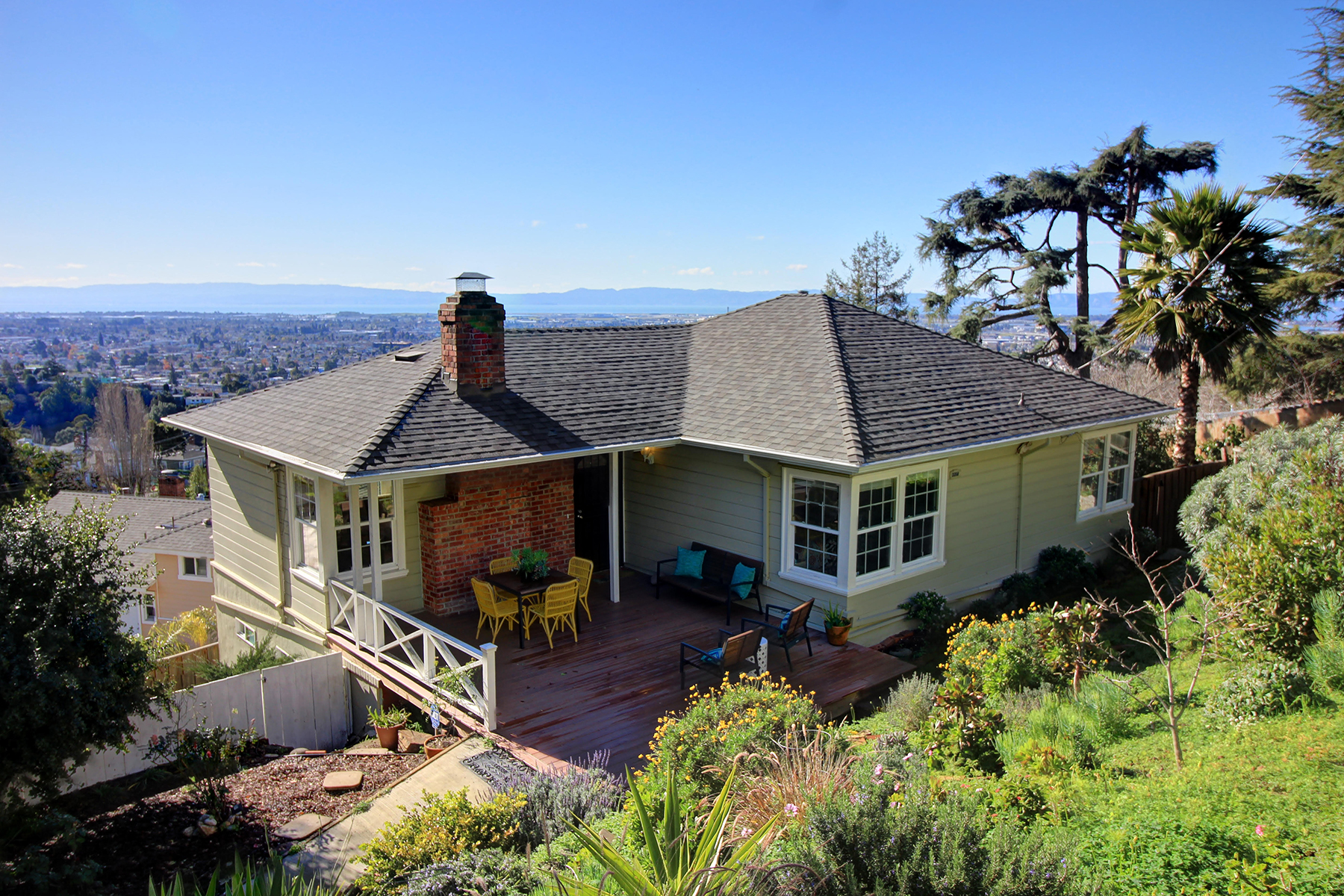
8037 McCormick Ave          8037 McCormick

Michelle and Marcia’s family was out-growing their Moss Avenue condo quickly and we needed to find an Oakland home with plenty of space, an easy commute to the City and a short trek to Skyline High.

After adventures in Maxwell Park and Millsmont we found this recently-remodeled charmer in a quiet section of the Eastmont Hills.  Not only did it have a hardwood floors and Bay views – an entire in-law unit was refurbished below!

Congratulations Guys!


California-home-prices-a-history_72


What’s Still Wrong With CA Real Estate?


By Pete Carey pcarey@mercurynews.com

The torrid pace of rent increases in the Bay Area is slowing, according to a survey of apartment complexes released Monday.

Average rents in the East Bay, Peninsula and San Francisco were nearly unchanged in the fourth quarter of last year and declined slightly in the South Bay, according to RealFacts, a Novato consulting group that tracks rents in apartment complexes with 50 or more units. That compares with the first half of the year, when some areas saw quarterly increases of 4 percent.

Some renters may be deciding that interest rates and low prices have made the time right to buy a condo, and that may account for some of the leveling off of rents, a RealFacts representative said. Occupancy rates for apartments have flattened out while condo sales were in the double digits in December from a year earlier in Alameda, Contra Costa, Santa Clara and San Mateo counties.

The South Bay saw a 1.4 percent decline in rents, from $1,981 to $1,954 a month, while the East Bay and Peninsula remained at $1,859 a month, the company said.

“Rents have hit a wall,” RealFacts owner Sarah Bridge said in a release accompanying the report.

She said RealFacts predicted last year that San Jose and San Francisco metro areas would plateau in early 2013, “but it appears that this has already happened in the fourth quarter.”

In San Jose, rents declined slightly to $1,825 in the fourth quarter from $1,845 the previous quarter. Oakland saw a slight increase to $1,961 from $1,925 in the third quarter. Concord’s average rent increased slightly to $1,288.

A two-bedroom, one-bath apartment in San Jose was commanding $1,644, down from $1,669 in the third quarter; the same size apartment in Concord went for $1,201 a month, and in Oakland for $1,654 a month, both slight increases, RealFacts said.

The small fourth-quarter increases in those cities ended a year that saw a gain of 17 percent over the previous year in Oakland, 8.8 percent in San Jose and 5.4 percent in Concord.

“We’ve seen increases almost every quarter. Now it’s flattened out a little bit,” said Nick Grotjahn, a RealFacts spokesman.

Grotjahn said rent increases also leveled off slightly in the fourth quarter of 2011, but this time “we think they’ve hit a ceiling as other factors are coming into play. I’m hearing the condo market is coming back, and that’s really the alternative to apartments,” Grotjahn said.

Young renters “are probably thinking it’s a good time to buy,” he said. “They can have the same lifestyle but the money is going toward something you own.”

via Bay Area rents are flattening out, new study says – Inside Bay Area.


Blanca Torres

Reporter-San Francisco Business Times

In the next year, construction crews will start work on several hundred apartment units in Lafayette and Walnut Creek. The projects set to break ground promise to inject the East Bay cities with a heavy dose of urbanism — higher density buildings close to transit that promote pedestrian activity.

Projects in Walnut Creek include Laconia Development’s 157 units with 23,000 square feet of retail at 1500 N. California St. and Mill Creek Residential Trust’s 126-unit redevelopment of a motor lodge.

One BART stop away in Lafayette, KB Home recently scored a green light to move forward with 82 condos adjacent to the city’s BART station.

“Walnut Creek is a suburban market, but it’s really going beyond that,” said Paul Menzies, head of Laconia Development. “You have a lot of youngish people interested in living in a downtown environment, but not necessarily in downtown San Francisco.”

Laconia’s project is just one among a number that developers have proposed in Lafayette and Walnut Creek, two Contra Costa County cities that are no strangers to apartment communities but are newbies when it comes to transit villages and pedestrian-oriented developments.

Menzies said his firm’s projects and others are building on what the cities already have — downtown retail, restaurants, and BART stations — that people want to live near.

Laconia expects construction to start next fall with completion in early 2015.

Mill Creek Residential plans to break ground in May.

“The greater Oakland metropolitan statistical area had among the highest rent growth in the country last year, and we believe there is still an opportunity for rent growth over the next few years,” said David Fiore, who is leading the project for Mill Creek.“In certain submarkets, the market continues to be supply-constrained and employment trends are moving in the right direction.”

Other projects are also in the works in Walnut Creek. BRE Properties is about a decade into developing a 600-unit transit village on BART surface parking near the Walnut Creek station. CenterStreet Development proposed 141 units at 207-235 Ygnacio Valley Road. Essex Property Trust is working on a 49-unit mixed-used project with 38,000 square feet of retail space at 1500 Newell Ave.

In Lafayette, O’Brien Land Co. LLC continues pushing forward to entitle a 315-unit apartment complex on a 22.7-acre site.

KB Home secured entitlements for its condo project late last year.

The fact that projects are going forward is progress, said Jeffrey Heller, principal of Heller Manus Architects, which designed KB Home’s Lafayette project. He said the project took several years to entitle and garnered the typical resistance from residents opposing change. But it also gained support from people who wanted housing options besides single-family homes on large lots.

“We went through a lot of design work to make sure the building would fit in well,” Heller said.

via Contra Costa to get dose of urban density – San Francisco Business Times.


330 13th Street, Oakland 

Sometimes things are just meant to be.  I’d been working with Ethan for a few months as the increasing popularity of Downtown Oakland continued to whittle away available inventory.  We wanted to get him into his first home at the right price and the right rate.

Ethan loved this building from the start but the list price was more than we wanted to consider.  The developer had only a few units left and was eager to finish the project up.  We proposed an offer well below list and held our ground – after many rounds of negotiations we were in contract at 10% below list with additional Seller financing.  We were able to secure an amazing rate and close soon after.  Congrats Ethan!

I met Derek after a simple search on the internet and he helped me find my first home in Oakland. Derek toured with me through many different complexes throughout West Oakland and downtown Oakland and made himself available on weekends to fit my busy schedule. He is extremely responsive on email (literally minutes on a reply) and drove the entire home buying process forward. I had high confidence that Derek would represent me and my interests when speaking to the developer/listing agent/other real estate agents. I highly recommend Derek as he is deeply experienced and is a friendly and responsible guy who will get the job done.

Ethan


BY: ESTHER CHO

No doubt, the potential of the REO to rental market has caught the attention of both individual and institutional investors. But, what is the potential of the REO to rental market, and how long will it continue? In a recent report authored by economist Paul Diggle, Capital Economics addressed those questions.

So far, Capital Economics said those who seized the opportunity early on appear to have achieved gross rental yields between 8 percent and 12 percent, a sufficient amount to cover the price tag of managing single-family rentals.

The sufficient rental yields, however, will only last as long as there are enough discounted properties to purchase.

Recently, the National Association of Realtors reported pending home sales slipped month-over-month in August, noting shortages of lower priced inventory in much of the country, especially in the West.

While recent housing data points to a decrease in the supply of distressed inventory, Capital Economics said, “the potential supply of distressed homes is considerable,” noting an estimated 3.8 million homeowners who are either deeply delinquent or already in foreclosure.

In addition, there are about 375,000 REOs, but “the actual supply on the market has been dropping rapidly, particularly in the cities being targeted by investors,” Diggle wrote.

Prices are also rising.

RealtyTrac recently reported a 6 percent quarterly increase in the average price of foreclosure-related sales.

In Phoenix, where prices fell drastically and are now rapidly rising, Capital Economics said the three-month annualized increase in prices is currently at 25 percent, a rate that will lead to the market becoming overvalued in a little over a year.

Thus, with distressed inventory shrinking and prices rising, the research firm said, “Investors will not continue acquiring single-family homes beyond a few more years.”

Once interest in the REO to rental market wanes, the focus will be on two exit strategies – selling the property or spinning off the rental portfolio to a property manager, Capital Economics explained.

The research firm concluded the report by stating, “The bottom line is that small-scale, ‘Mom and Pop’ investors will continue to provide the bulk of the homes to the single-family rental market. Nevertheless, depending on how efficiently institutional investors can acquire single-family homes over the next few years, there is scope for them to make a significant contribution to the housing recovery.”

via Where the Single-Family Rental Market Is Heading: Capital Economics.